Ironville and Codnor Park Primary School Believe Achieve Succeed
Reading
Early Reading: Phonics
Our intention in phonics is that every child is equipped with the early skills to learn to read and spell
At Ironville and Codnor Park Primary School, we base our teaching upon synthetic phonics using the ‘Phonics Bug’ Scheme which is a rigorous and systematic programme, with accompanying decodable readers and IT e-books which can be accessed from home.
Children are taught phonics daily in an explicit session. They are taught to:
- Discriminate between the separate phonemes (sounds) in words;
- Learn the letters and letter combinations most commonly used to spell those sounds;
- Read words by sounding out and blending their separate parts;
- Write words by combining the spelling patterns of their sounds.
How to access 'Phonic Bug' reading at home
Year One Phonic Screening Check
Language Comprehension
As children learn word recognition and decoding skills they develop their understanding of the text and appreciation of the range of reading material they can access. In EYFS we set out to secure good communication alongside phonics and promote reading aloud using choral and echo reading strategies throughout school to develop fluency. We teach explicit language skills through our daily English and ‘Book Club’ sessions, which is an opportunity to develop essential ‘VIPERS’ skills (Vocabulary, Inference, Prediction, Explanation, Retrieval and Summary/Sequencing skills). The session acknowledges individual starting points and background knowledge so they can share their own experiences and develop an awareness of the possible themes or vocabulary that may appear in the text they are about to read. Our guidance manual below outlines the content that is be covered. Reading books are chosen from a range of text types and structures (Doug Lemov) in order to excite and motivate children. All children read at an appropriately challenging level, with their peers and an adult, every day.
Ironville and Codnor Park Book Clubs
Home Reading
Pupils choose or are provided with an individual reading book to take home, matched to their independent reading ability. They also have access to a book for 'sharing' at home. Reading is reviewed weekly and assessed regularly. Pupils are given opportunities to engage in online reading through 'Phonics Bug' online and 'Reading Eggs' individualised online programme. Children are expected to read at least three times, at home, during the week. Parents and the home environment are essential to the early teaching of reading and fostering a love of reading; children are more likely to continue to be readers in homes where books and reading are valued (Clark and Rumbold, 2006).
Reading for pleasure
A growing number of studies show that promoting reading can have a major impact on children and adults and their future. Upon reviewing the research literature, Clark and Rumbold (2006) identify several main areas of the benefits to reading for pleasure:
• Reading attainment and writing ability;
• Text comprehension and grammar;
• Breadth of vocabulary;
• Positive reading attitudes;
• Greater self-confidence as a reader;
• Pleasure in reading in later life;
• General knowledge;
• A better understanding of other cultures;
• Community participation; and
• A greater insight into human nature and decision-making.
We prioritise reading and have daily 'Storytime' in every class and timetabled 'Rhyme Time' and 'Singing Sessions' in EYFS and Year One.
We have both a fiction and non-fiction library housing a range of good quality text types. Along with access to the library bus every four weeks, each child has opportunities to browse and enjoy books in their classroom book corners. The library is developing. The use of the library allows children to carry out research to support other curriculum areas.
Our creative homework booklet is linked with reading to encourage the children to read more at home, in addition:
- Wrens have a 'Bedtime Bear' and 'Wonderful World of Words' game which they take in turns to take home and read to;
- Robins, Kestrels and Eagles have reading 'chains' that are awarded for reading three times at home, and shared at the end of each full term,
- Annual Summer and Winter Reading Challenges,
- House Points are rewarded with Book Prizes,
- Celebration of Book events such as World Book Day, National Poetry Day and National Storytelling Week,
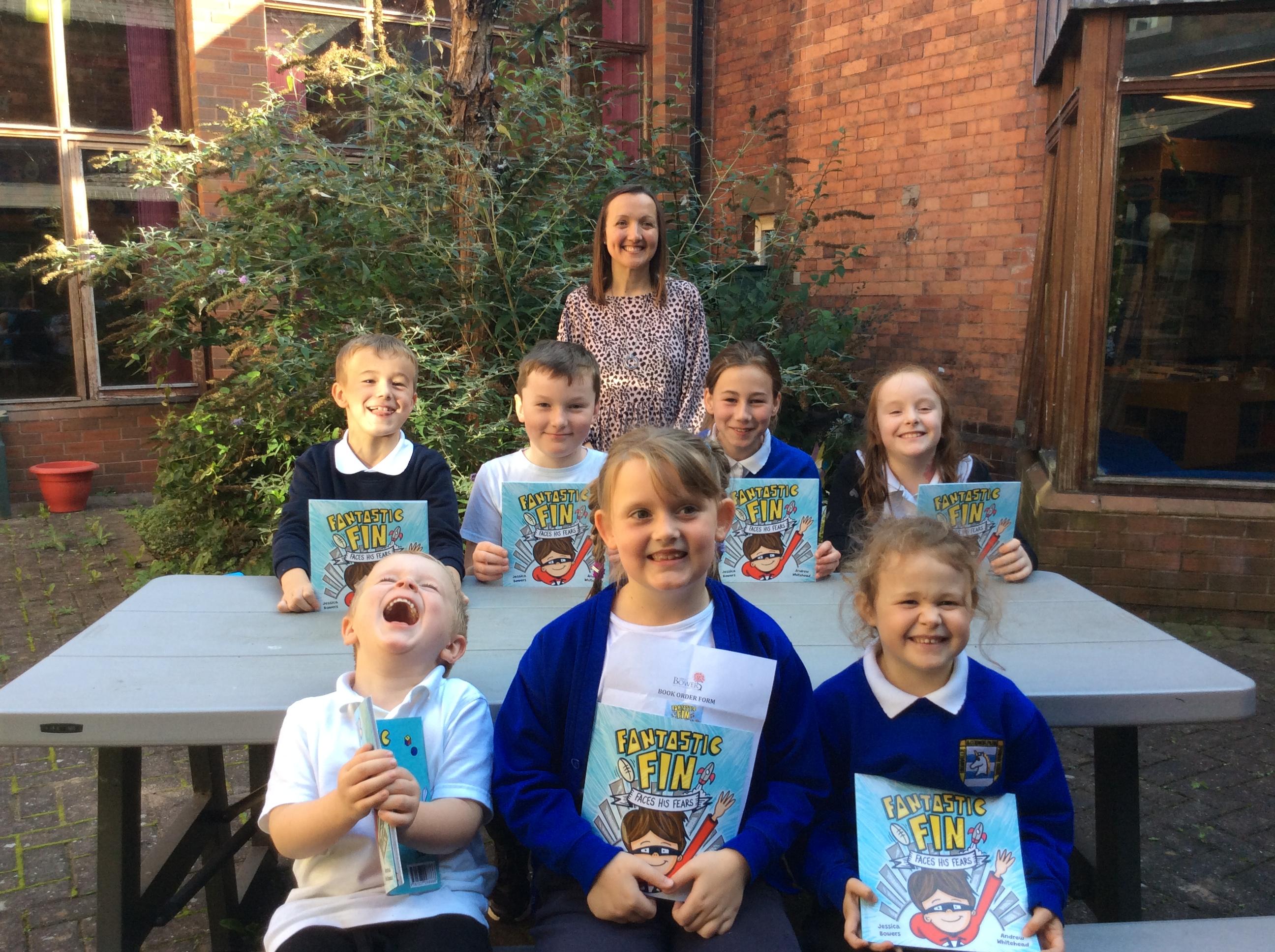
- Author visits
Helping your child to read at home
Sharing books
Try to find time each day to look at a book together. Children like hearing their favourite stories again and again.
Reading with your Child: Parent Advice Booklets
- EYFS reading prompt bookmarksPDF File
- Year 1 reading with your child parent advice bookletPDF File
- Year 2 reading with your child parent advice bookletPDF File
- Year 3 reading with your child parent advice bookletPDF File
- Year 4 reading with your child parent advice bookletPDF File
- Year 5 reading with your child parent advice bookletPDF File
- Year 6 reading with your child parent advice bookletPDF File
Drawing with Rob Biddulph - Empathy and Reading for Pleasure June 2025


World Book Day 2025


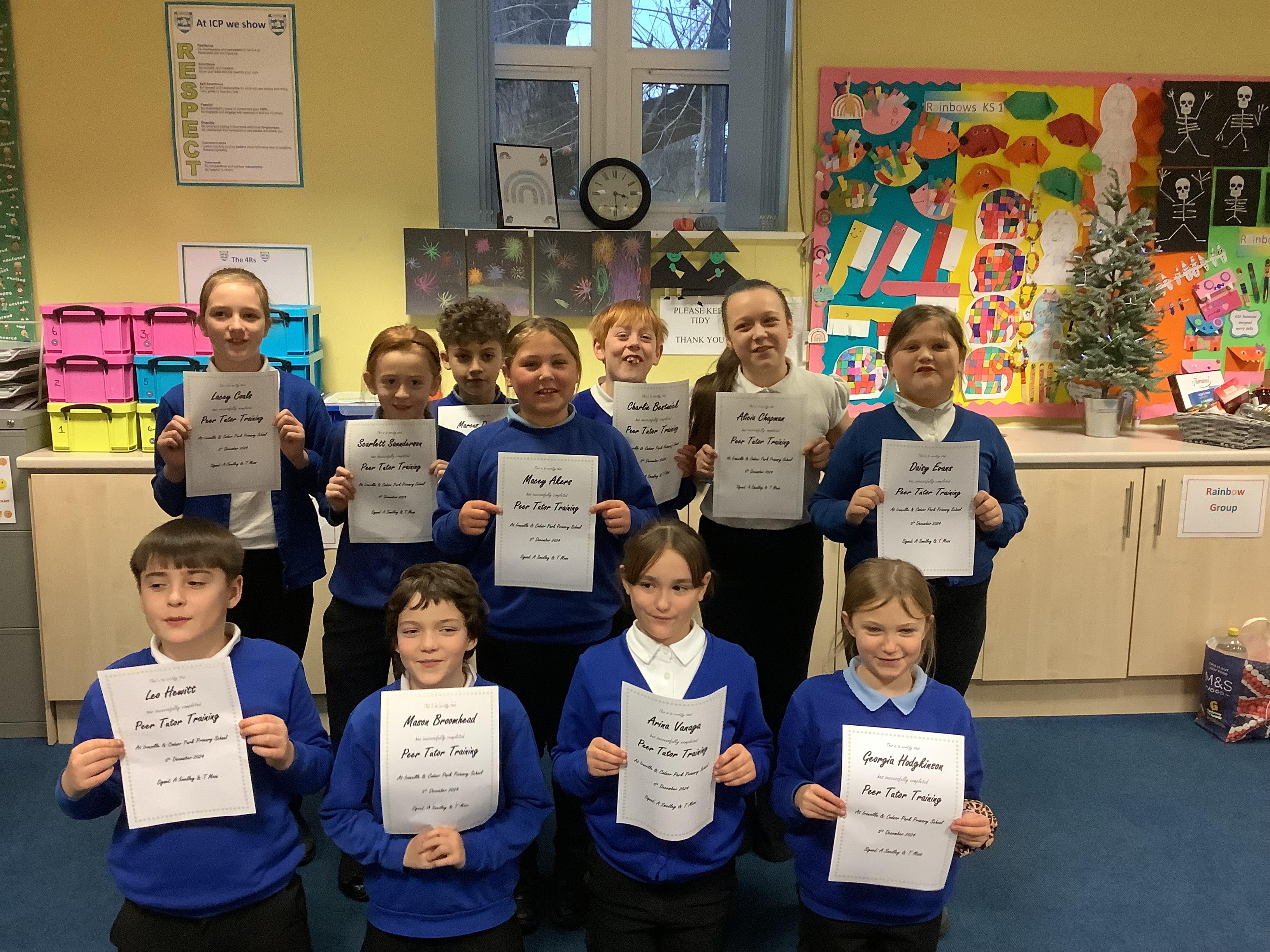
Peer Tutors 2024-2025
World Book Day 2024


Peer Tutors


World Book Day Celebrations 2023


World Book Day 2022


LIVE-STREAM: World Book Day LIVE with Matilda and friends


23.9.21 Jessica Bowers 'Wellbeing Author' Visit sharing 'Fantastic Finn'